New Sky Building is located in Higashi Shinjuku.
This condominiums are called "Gunkan" or "Warship" because of the shape of the rooftop.
I don't know what's inside of that part but it looks like a bridge of the warship.
**********************************************************
<The Nearest Station>
Higashi Shinjuku station on Oedo Line / Fukutoshin Line
(E02/Toei Subway/F12/Tokyo Metro)
**********************************************************
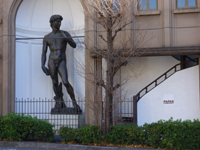
I found an impressive art at the entrance of another building near here.
Richie (Certified National Guide) is introducing interesting spots in Tokyo.
2016年10月21日金曜日
2016年10月20日木曜日
Saiwai Inari Shrine
This shrine was established in Edo era but nobody knows detail history.
It was transferred to Hie Shrine temporarily while this area was redeveloped.
Current shrine was rebuilt in 2014.
So it's pretty new but very small. May be the smallest shrine I've ever seen.
Saiwai means happiness.
But nobody knows how this shrine was named like that.
*******************************************
<The Nearest Station>
Ginza Icchome station on Yurakucho Line
(Y19/Tokyo Metro)
*******************************************
It was transferred to Hie Shrine temporarily while this area was redeveloped.
Current shrine was rebuilt in 2014.
So it's pretty new but very small. May be the smallest shrine I've ever seen.
Saiwai means happiness.
But nobody knows how this shrine was named like that.
*******************************************
<The Nearest Station>
Ginza Icchome station on Yurakucho Line
(Y19/Tokyo Metro)
*******************************************
場所:
日本, 東京都、銀座
2016年10月19日水曜日
Ryuko Fudoson Temple
Ryuko Fudoson Temple is also located on the rooftop of Ginza Matsuya Department Store.
A statue of Buddha was transferred here from Ryukoin Temple in Koyasan Temple in 1929.
This statue seems to be made in 14th century.
This temple is for prosperity and safety of family.
Also, it's told to be good about fashion related things.
************************************************
<The Nearest Station>
Ginza Icchome station on Yurakucho Line
Ginza station on Hibiya Line / Ginza Line
(Y19/H08/G09/Tokyo Metro)
************************************************

A statue of Buddha was transferred here from Ryukoin Temple in Koyasan Temple in 1929.
This statue seems to be made in 14th century.
This temple is for prosperity and safety of family.
Also, it's told to be good about fashion related things.
************************************************
<The Nearest Station>
Ginza Icchome station on Yurakucho Line
Ginza station on Hibiya Line / Ginza Line
(Y19/H08/G09/Tokyo Metro)
************************************************

場所:
日本, 東京都、銀座
2016年10月18日火曜日
Mimeguri Shrine & Shusse Jizoson
These shrines are on the rooftop of Ginza Mitsukoshi Department Store.
Mimeguri Shrine deifies a guardian god of Mitsu family, founder of Mitsui financial group.
It's told that this shrine was established by the great priest Kobo Daishi.
If so, it must be in early 9th century.
When this shrine was rebuilt in 14th century, a white fox appeared to make a circle around the object of worship three times. This is the reason why this shrine was named Mimeguri Shrine.
Mimeguri means circle around three times.
Beside Mimeguri Shrine, there's Gunza Shusse Jizoson.
It appeared from Sanjukken Bori, moat of Edo castle in early Meiji era (late 19th century).
It's settled near the corner of Ginza Yonchome Cross Section and became popular since it's highly responsible to prayers for their prosperity and success in life.
It's relocated to the rooftop of the building in 1968.
************************************************
<The Nearest Station>
Ginza station on Hibiya Line / Ginza Line
(H08/G09/Tokyo Metro)
************************************************
Mimeguri Shrine deifies a guardian god of Mitsu family, founder of Mitsui financial group.
It's told that this shrine was established by the great priest Kobo Daishi.
If so, it must be in early 9th century.
When this shrine was rebuilt in 14th century, a white fox appeared to make a circle around the object of worship three times. This is the reason why this shrine was named Mimeguri Shrine.
Mimeguri means circle around three times.
Beside Mimeguri Shrine, there's Gunza Shusse Jizoson.
It appeared from Sanjukken Bori, moat of Edo castle in early Meiji era (late 19th century).
It's settled near the corner of Ginza Yonchome Cross Section and became popular since it's highly responsible to prayers for their prosperity and success in life.
It's relocated to the rooftop of the building in 1968.
************************************************
<The Nearest Station>
Ginza station on Hibiya Line / Ginza Line
(H08/G09/Tokyo Metro)
************************************************
場所:
日本, 東京都、銀座
2016年10月17日月曜日
Hodo Inari Shrine
Hodo Inari Shrine is located in the narrow alley between Namiki Street and Renga (Brick) Street.
Original shrine was in Edo castle to protect kids of Shogun.
So this shrine is for child care.
Hodo means treasure child.
This shrine is very small but there're few shrines stand on the ground in Ginza.
Many shrines are located on the rooftop of the buildings in the canter of Tokyo.
************************************************
<The Nearest Station>
Ginza station on Hibiya Line / Ginza Line
(H08/G09/Tokyo Metro)
************************************************
Original shrine was in Edo castle to protect kids of Shogun.
So this shrine is for child care.
Hodo means treasure child.
This shrine is very small but there're few shrines stand on the ground in Ginza.
Many shrines are located on the rooftop of the buildings in the canter of Tokyo.
************************************************
<The Nearest Station>
Ginza station on Hibiya Line / Ginza Line
(H08/G09/Tokyo Metro)
************************************************
場所:
日本, 東京都、銀座
2016年10月16日日曜日
Azuma Inari Shrine
Azuma Inari Shrine is at the corner of Azuma street and Mihara Alley.
There're fire many times around here after the World War II.
People found out there used to be a shrine here.
In order to avoid fire, they built Azuma Inari Shrine here.
There's no fire after then.
It's surrounded by buildings.
************************************************
<The Nearest Station>
Ginza station on Hibiya Line / Ginza Line
(H08/G09/Tokyo Metro)
************************************************
There're fire many times around here after the World War II.
People found out there used to be a shrine here.
In order to avoid fire, they built Azuma Inari Shrine here.
There's no fire after then.
It's surrounded by buildings.
************************************************
<The Nearest Station>
Ginza station on Hibiya Line / Ginza Line
(H08/G09/Tokyo Metro)
************************************************
場所:
日本, 東京都、銀座
2016年10月15日土曜日
Jorenji Temple
Jorenji has Tokyo Daibutsu, great Buddha statue.
It's the third largest bronze casting seated figure statue of Buddha in Japan.
The largest one is in Nara and second one is in Kamakura.
Tokyo Daibutsu is about a half size of one in Nara.
The original temple was established around 1400 and used to be in Nakajuku in Itabashi.
In 1973, it's moved to current place due to road expansion.
Daibutsu was built in 1977.
There's the grave of Naomi Uemura who was famous adventurer.
*****************************************************************
<The Nearest Station>
Nishi Takashimadaira station on Mita Line (I27/Toei Subway)
*****************************************************************


It's the third largest bronze casting seated figure statue of Buddha in Japan.
The largest one is in Nara and second one is in Kamakura.
Tokyo Daibutsu is about a half size of one in Nara.
The original temple was established around 1400 and used to be in Nakajuku in Itabashi.
In 1973, it's moved to current place due to road expansion.
Daibutsu was built in 1977.
There's the grave of Naomi Uemura who was famous adventurer.
*****************************************************************
<The Nearest Station>
Nishi Takashimadaira station on Mita Line (I27/Toei Subway)
*****************************************************************


2016年10月14日金曜日
Shogetsuin Temple
Feudal Load Yoritane Chiba built Akatsuka castle in 1456 and decided a temple as his family temple in 1492. He donated land and changed the name of the temple to Shogetsuin.
This temple was acknowledged by Shogun and protected.
This place is known as the place gunnery practice was held at the end of Edo era.
Western style gunnery practice surprised feudal loads.
*****************************************************************
<The Nearest Station>
Nishi Takashimadaira station on Mita Line (I27/Toei Subway)
*****************************************************************

This temple was acknowledged by Shogun and protected.
This place is known as the place gunnery practice was held at the end of Edo era.
Western style gunnery practice surprised feudal loads.
*****************************************************************
<The Nearest Station>
Nishi Takashimadaira station on Mita Line (I27/Toei Subway)
*****************************************************************

2016年10月13日木曜日
Akatsuka Joshi
There's a hill beside Akatsuka Tameike Park.
There used to be a castle of Chiba family which was built in 1456.
There's nothing but a flat space on the top of the hill.
This hill is now a bird sanctuary with natural forest on the hill.
Chiba family fought with Toshima family in Shakujii castle and Shakujii castle fell.
Current Shakujii Park is where Shakujii castle used to be.
*****************************************************************
<The Nearest Station>
Nishi Takashimadaira station on Mita Line (I27/Toei Subway)
*****************************************************************

There used to be a castle of Chiba family which was built in 1456.
There's nothing but a flat space on the top of the hill.
This hill is now a bird sanctuary with natural forest on the hill.
Chiba family fought with Toshima family in Shakujii castle and Shakujii castle fell.
Current Shakujii Park is where Shakujii castle used to be.
*****************************************************************
<The Nearest Station>
Nishi Takashimadaira station on Mita Line (I27/Toei Subway)
*****************************************************************

2016年10月12日水曜日
Itabashi City Museum of Art
Itabashi City Museum of Art is the first city museum in Tokyo metropolitan 23 cities.
It's located on the other side of the pond in front of Itabashi City Local Museum in Akatsuka Tameike Park.
The Museum has collection of Japanese arts in Edo era, paintings by the artists related to Itabashi City.
Special exhibitions are held.
Every year there's exhibition of works from Bologna Competition of Arts for Picture Books.
*****************************************************************
<The Nearest Station>
Nishi Takashimadaira station on Mita Line (I27/Toei Subway)
<Admission>
Varies by exhibitions
9:30-17:00 Closed on Mondays, Year end and New Year Holidays
*****************************************************************

It's located on the other side of the pond in front of Itabashi City Local Museum in Akatsuka Tameike Park.
The Museum has collection of Japanese arts in Edo era, paintings by the artists related to Itabashi City.
Special exhibitions are held.
Every year there's exhibition of works from Bologna Competition of Arts for Picture Books.
*****************************************************************
<The Nearest Station>
Nishi Takashimadaira station on Mita Line (I27/Toei Subway)
<Admission>
Varies by exhibitions
9:30-17:00 Closed on Mondays, Year end and New Year Holidays
*****************************************************************

2016年10月11日火曜日
Itabashi City Local Museum
Itabashi City is one of metropolitan 23 cities in Tokyo and located in North West Tokyo.
Museum exhibits history, culture and life in this area.
Regular exhibitions are on the first floor and special exhibitions are on the second floor.
Since Itabashi was the first post station from Edo on Nakasendo road, the entrance of an old whorehouse is in front of the museum.
The first post station from Edo on main roads in Edo era was also known as 4 red-light districts.
* Itabashi (Nakasendo road)
* Senju (Nikko Kaido road)
* Shinjuku (Kushu Kaido road)
* Shinagawa (Tokaido road)
These places were called "side places" because there's Yoshiwara district near Asakusa in the center of Edo.
*****************************************************************
<The Nearest Station>
Nishi Takashimadaira station on Mita Line (I27/Toei Subway)
<Admission>
Free of Charge
9:30-17:00 Closed on Mondays, Year end and New Year Holidays
*****************************************************************
Museum exhibits history, culture and life in this area.
Regular exhibitions are on the first floor and special exhibitions are on the second floor.
Since Itabashi was the first post station from Edo on Nakasendo road, the entrance of an old whorehouse is in front of the museum.
The first post station from Edo on main roads in Edo era was also known as 4 red-light districts.
* Itabashi (Nakasendo road)
* Senju (Nikko Kaido road)
* Shinjuku (Kushu Kaido road)
* Shinagawa (Tokaido road)
These places were called "side places" because there's Yoshiwara district near Asakusa in the center of Edo.
*****************************************************************
<The Nearest Station>
Nishi Takashimadaira station on Mita Line (I27/Toei Subway)
<Admission>
Free of Charge
9:30-17:00 Closed on Mondays, Year end and New Year Holidays
*****************************************************************
2016年10月10日月曜日
Yamatane Museum of Art
Yamatane Museum of Art exhibits collection of Mr. Taneji Yamazaki, the founder of SMBC-Friend corporation, one of the large stock brokerage companies. Museum is named after his name.
It has fine traditional Japanese paintings.
It has special exhibitions from its collection periodically.
On the way to go to the museum from the station, you'll find a statue of David.
This is not related to the museum. This building is for an apparel business company.
******************************************************************
<The Nearest Station>
JR Ebisu station on Yamanote Line
<Admission>
Varies by exhibitions
10:00-17:00 Closed on Mondays, Year end and New Year holidays
******************************************************************

It has fine traditional Japanese paintings.
It has special exhibitions from its collection periodically.
On the way to go to the museum from the station, you'll find a statue of David.
This is not related to the museum. This building is for an apparel business company.
******************************************************************
<The Nearest Station>
JR Ebisu station on Yamanote Line
<Admission>
Varies by exhibitions
10:00-17:00 Closed on Mondays, Year end and New Year holidays
******************************************************************

場所:
日本, 東京都、広尾
登録:
投稿 (Atom)