2016年8月8日月曜日

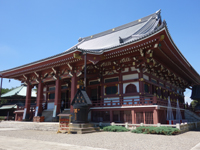
Ikegami Hommonji Temple

Ikegami Hommonji Temple is the place where Nichiren, one of the greatest priests of Buddhism in Japan passed away in late 13th century.

His followers visit here on his death anniversary every year.
300,000 people visit here at the night of October 12th.

**********************************************************
<The Nearest Station>

Nishi Magome station on Asakusa Line (A01/Toei Subway)
Ikegami station on Tokyu Ikegami Line

**********************************************************


2016年8月7日日曜日

Jishoin Temple

Jishoin Temple is told to be established by Kukai, one of the greatest priest in 8th century.
This temple is called cat temple because of the episode of Dokan Ota in 15th century.

Dokan Ota is known as a feudal load who built Edo castle.
When he lost his way in a civil war, a black cat leaded him to this temple to save him.
He defied this cat here after the death of the cat.

In the temple, there're few items to show it's cat temple except a statue at the entrance.
Neko Jizo or guardian deity of children with a cat face is defied but it's hidden.
It's open to public only on February 3rd which is the day before the beginning of spring.

*******************************************************************
<The Nearest Station>

Ochiai Minami Nagasaki station on Oedo Line (E33/Toei Subway)

*******************************************************************


2016年8月6日土曜日

Tetsugakudo Park - Buildings

On the hill in Tetsugakudo Park, there'er several unique buildings.

Shiseido is also called Tetusgakudo after which this park was named.
Tetsugaku means philosophy.
This building defies four philosophers in the world, Buddha, Confucius, Socrates and Kant.

They have a red hexagon building to defy 6 wise men in Asia.

A triangle hut on a hill defies 3 scholars about 3 religions in Japan, Buddhism, Shintoism and Confucianism.

*********************************************************************
<The Nearest Station>

Arai Yakushi Mae station on Seibu Shinjuku Line
Ochiai Minami Nagasaki station on Oedo Line (E33/Toei Subway)

<Admission>

Free of Charge

*********************************************************************


2016年8月5日金曜日

Tetsugakudo Park - Philosophical Garden

Tetsugakudo Park is a unique park to make you think about something.
Along with a river, there's an area called philosophical Garden and a hill with unique buildings.

There're statues of philosophers and founders of religions in the world like Buddha, Jesus etc.
The origin of this garden is in Budapest in Hungary.

These statues make three circles on the lawn.
It's very quiet and calm place.

*********************************************************************
<The Nearest Station>

Arai Yakushi Mae station on Seibu Shinjuku Line
Ochiai Minami Nagasaki station on Oedo Line (E33/Toei Subway)

<Admission>

Free of Charge

*********************************************************************


2016年8月4日木曜日

Arai Yakushi

People call this temple Arai Yakushi since they have Yakushi Nyorai, a buddha able to cure all ills in Arai town.

Official name of this temple is Baishoin which means temple with shining plum tree.

It's told the begging of this temple is a little hut made by a priest in 14th century.
In 16th century, a plum tree in the garden suddenly started shining and a statue of Yakushi Nyorai was found in the plum tree.

Just like Nishi Arai Daishi Temple, Arai means "new well".
The water of the well is served to public.

*****************************************************
<The Nearest Station>

Arai Yakushi Mae station on Seibu Shinjuku Line

*****************************************************


2016年8月3日水曜日

Oji Shrine

Oji Shrine was called Oji Gongen or Oji Incarnation and this area was named Oji after Oji Gongen.

It's told that Yoshiie Minamoto who is a feudal load in 11th century dedicated his armor here after his conquest in North Japan.

Toshima family, a feudal load in 14th century built shrine and this became Oji Shrine.

There's another unique shrine in the area.
Seki Shrine has a god for wigs.
This shrine defies Semimaru who's the 4th prince of Engitei, 60th emperor in 9th century.
He made a wig for his sister whose hair stood up.

So, wig makers, hair dressers, actors and actresses visit this shrine.

********************************************
<The Nearest Station>

JR Oji station on Keihin Tohoku Line

********************************************


2016年8月2日火曜日

Nanushi No Taki Garden

Nanushi means headman of the village and Taki means waterfall.
This place used to be a garden of the headman of Oji village in Edo era.
He made some waterfalls in his garden and opened his garden to public.

In 1938, Seiyoken restaurants bought this place to make a restaurant and a swimming pool.
Tokyo city took over this place after bombing in World War II and repaired the garden.
Now it's managed by Kita city.

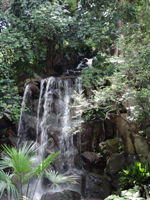
This garden has 4 waterfalls, river and pond with many trees.
Water is circulated from the pond to the waterfall by pump.

They have a tea house for tea ceremony, too.

********************************************************
<The Nearest Station>

JR Oji station on Keihin Tohoku Line

<Admission>

Free of Charge

9:00-17:00 (Jul. 15 - Sep. 15: 9:00-18:00)

********************************************************


2016年8月1日月曜日

Oji Inari Shrine

Oji Inari Shrine was one of the most popular shrines in Edo era.
It's famous for fox parade on New Years Eve.

Also, a story of Rakugo (Comical story telling) is about foxes in this shrine.

There's a stone for making wishes.
When you hold the stone making a wish, if you feel it lighter than you thought, your wish may become true. If you feel it heavier than you thought, you have a long way to go.

*********************************************
<The Nearest Station>

JR Oji station on Keihin Tohoku Line

*********************************************