One block from the Komagome Tenso Shrine, you can find an old house gate of Nanushi Yashiki.
You cannot get into the gate because this house is still used as a residence by offspring of Takagi family. All you may see is the gate.
Takagi family ruled this area as Nanushi, head of the North half of Komagome area in Edo era.
Current gate was built in 1717.
The entrance with a platform was not permitted for common people's housing and therefore structure belongs to a high rank.
********************************************************
<The Nearest Station>
JR Komagome station on Yamanote Line
Komagome station / Honkomagome station
on Namboku Line (N14/N13/Tokyo Metro)
********************************************************
Richie (Certified National Guide) is introducing interesting spots in Tokyo.
2016年6月9日木曜日
2016年6月8日水曜日
Komagome Tenso Shrine
Komagome Tenso Shrine has a longer history than it looks.
It's said that Yoritomo Minamoto, the founder of Kamakura government stopped by on the way back to Kamakura after the conquest in North Japan in late 12th century.
This shrine has the same story as Tabata Hachiman Shrine.
Main hall is built in Shinmei style like Ise Shrine since Amaterasu Omikami, the Goddess of the sun is deified here.
Shirine was rebuilt in 17th century but lost all buildings by bombing in World War II.
So current buildings were built after the war. No wonder why it looks new compared to the history.
********************************************************
<The Nearest Station>
JR Komagome station on Yamanote Line
Komagome station / Honkomagome station
on Namboku Line (N14/N13/Tokyo Metro)
********************************************************


It's said that Yoritomo Minamoto, the founder of Kamakura government stopped by on the way back to Kamakura after the conquest in North Japan in late 12th century.
This shrine has the same story as Tabata Hachiman Shrine.
Main hall is built in Shinmei style like Ise Shrine since Amaterasu Omikami, the Goddess of the sun is deified here.
Shirine was rebuilt in 17th century but lost all buildings by bombing in World War II.
So current buildings were built after the war. No wonder why it looks new compared to the history.
********************************************************
<The Nearest Station>
JR Komagome station on Yamanote Line
Komagome station / Honkomagome station
on Namboku Line (N14/N13/Tokyo Metro)
********************************************************


場所:
日本, 東京都、駒込
2016年6月7日火曜日
Kichijoji Temple
There's Kichijoji town on Chuo Line but Kichijoji Temple is not in Kichijoji town.
It's in Komagome.
Original Kichijoji Temple was built in Suidobashi in Mid 15th century but people lost the town due to a big fire in 1657. People had moved to current Kichijoji to start new life there.
Kichijoji Temple had left safe in this fire but burnt down in the other fire later.
It's rebuilt at current place in Komagome.
There's a monument of the story of Yaoya Oshichi since this story was set in this temple.
It's a story of a girl who set a fire in order to meet a priest boy again whom she'd met with when she'd evacuated from the past fire.
********************************************************
<The Nearest Station>
JR Komagome station on Yamanote Line
Komagome station / Honkomagome station
on Namboku Line (N14/N13/Tokyo Metro)
********************************************************


It's in Komagome.
Original Kichijoji Temple was built in Suidobashi in Mid 15th century but people lost the town due to a big fire in 1657. People had moved to current Kichijoji to start new life there.
Kichijoji Temple had left safe in this fire but burnt down in the other fire later.
It's rebuilt at current place in Komagome.
There's a monument of the story of Yaoya Oshichi since this story was set in this temple.
It's a story of a girl who set a fire in order to meet a priest boy again whom she'd met with when she'd evacuated from the past fire.
********************************************************
<The Nearest Station>
JR Komagome station on Yamanote Line
Komagome station / Honkomagome station
on Namboku Line (N14/N13/Tokyo Metro)
********************************************************


場所:
日本, 東京都、駒込
2016年6月6日月曜日
Komagome Fuji Shrine
Fuji Shrine in Komagome is one of Fuji Shrines which are branches of Sengen Shrine at Mount Fuji. There's no clear record when this shrine was open, but it seems to be sometime in early Edo era.
Konohana Sakuya Hime, a Goddess in old myth is deified.
Her name means beautiful prince like cherry blossoms.
This shrine's sacred tree is cherry blossom.
There're many monuments dedicated by fire fighters in Edo era.
********************************************************
<The Nearest Station>
JR Komagome station on Yamanote Line
Komagome station / Honkomagome station
on Namboku Line (N14/N13/Tokyo Metro)
********************************************************


Konohana Sakuya Hime, a Goddess in old myth is deified.
Her name means beautiful prince like cherry blossoms.
This shrine's sacred tree is cherry blossom.
There're many monuments dedicated by fire fighters in Edo era.
********************************************************
<The Nearest Station>
JR Komagome station on Yamanote Line
Komagome station / Honkomagome station
on Namboku Line (N14/N13/Tokyo Metro)
********************************************************


場所:
日本, 東京都、駒込
2016年4月5日火曜日
Someiyoshino Memorial Park
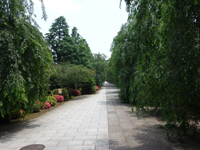
There's a memorial park to show the original place of Someiyoshino in front of Komagome station.
Someiyoshino was born in this area by mating of Edohiganzakura and Oshimazakura.
Both species are here together with Someiyoshino so that you can compare the differences.
All Someiyoshino are clones of original one since this species can be increased only by grafting.
************************************************
<The Nearest Station>
Komagome station on JR Yamanote Line /
Namuboku Line (N14/Tokyo Metro)
************************************************
Someiyoshino was born in this area by mating of Edohiganzakura and Oshimazakura.
Both species are here together with Someiyoshino so that you can compare the differences.
All Someiyoshino are clones of original one since this species can be increased only by grafting.
************************************************
<The Nearest Station>
Komagome station on JR Yamanote Line /
Namuboku Line (N14/Tokyo Metro)
************************************************
2015年11月15日日曜日
Toyo Bunko Museum
Toyo Bunko is a library of Oriental studies.
This museum exhibits historical books about Oriental world.
In the Orient Hall on the 1st floor, you'll see many old original books in a long exhibition case and books in the library on graphic screen.
The second floor is dark to protect books.
When you get to the second floor, there's an impressive Morrison's library.
Hisaya Iwasaki, the founder of Toyo Bunko and a member of Iwasaki financial group bought 24,000 books from Australian Professor Morrison who studied about Orient in Beijing.
Also, some Ukiyo-e arts are exhibited in turn only for 1 month in 100 years.
Exhibitions here are unique and beautiful.
A fine restaurant is on the back side of museum and some sentences in foreign languages are on the wall of the hall way to the restaurant. Garden between the museum and the restaurants is nice to see.
************************************************************************
<The Nearest Station>
JR Komagome station on Yamanote Line
Komagome station on Namboku Line (N14/Tokyo Metro)
Sengoku station on Mita Line (I14/Toei Subway)
<Admission>
900 yen
10:00-1900 Closed on Tuesdays
************************************************************************


This museum exhibits historical books about Oriental world.
In the Orient Hall on the 1st floor, you'll see many old original books in a long exhibition case and books in the library on graphic screen.
The second floor is dark to protect books.
When you get to the second floor, there's an impressive Morrison's library.
Hisaya Iwasaki, the founder of Toyo Bunko and a member of Iwasaki financial group bought 24,000 books from Australian Professor Morrison who studied about Orient in Beijing.
Also, some Ukiyo-e arts are exhibited in turn only for 1 month in 100 years.
Exhibitions here are unique and beautiful.
A fine restaurant is on the back side of museum and some sentences in foreign languages are on the wall of the hall way to the restaurant. Garden between the museum and the restaurants is nice to see.
************************************************************************
<The Nearest Station>
JR Komagome station on Yamanote Line
Komagome station on Namboku Line (N14/Tokyo Metro)
Sengoku station on Mita Line (I14/Toei Subway)
<Admission>
900 yen
10:00-1900 Closed on Tuesdays
************************************************************************


2015年9月8日火曜日
Rikugien Gardens
This place was the house of Yoshiyasu Yanagisawa who was a right hand man of the fifth Shogun Tsunayoshi Tokugawa in early 18 century (Edo era).
In Meiji era, it's owned by Yataro Iwasaki, the founder of Mitsubishi industrial group.
Mr. Iwasaki had many gardens in Tokyo.
This is a typical Japanese garden with a pond in center.
There're symbolic 88 landscapes after old Japanese poems.
************************************************************************
<The Nearest Station>
JR Komagome station on Yamanote Line
Komagome station on Namboku Line (N15/Tokyo Metro)
<Admission>
300 yen
9:00-17:00
Closed on Dec. 29th - Jan. 1st
************************************************************************
Rikugien is open at night in the week of Autumn Leaves.
It's open at night in the week of Cherry Blossoms, too.
This is also one of 9 Tokyo Metropolitan Gardens.
In Meiji era, it's owned by Yataro Iwasaki, the founder of Mitsubishi industrial group.
Mr. Iwasaki had many gardens in Tokyo.
This is a typical Japanese garden with a pond in center.
There're symbolic 88 landscapes after old Japanese poems.
************************************************************************
<The Nearest Station>
JR Komagome station on Yamanote Line
Komagome station on Namboku Line (N15/Tokyo Metro)
<Admission>
300 yen
9:00-17:00
Closed on Dec. 29th - Jan. 1st
************************************************************************
Rikugien is open at night in the week of Autumn Leaves.
It's open at night in the week of Cherry Blossoms, too.
This is also one of 9 Tokyo Metropolitan Gardens.
2015年9月7日月曜日
Kyu Furukawa Gardens
This place was the house of Furukawa Industrial Group.
Western style building was designed by Josiar Conder.
Gardens are on a slope.
There's a western style rose garden on hillside.
Japanese style garden with a pond is at the bottom of the land.
This place is compact but has variety of landscapes and very beautiful especially in autumn.
********************************************************************
<The Nearest Station>
JR Komagome station on Yamanote Line
Komagome station on Namboku Line (N15/Tokyo Metro)
<Admission>
150 yen
9:00-17:00
Closed on Dec. 29th - Jan. 1st
********************************************************************
This is also one of 9 Tokyo Metropolitan Gardens.


Western style building was designed by Josiar Conder.
Gardens are on a slope.
There's a western style rose garden on hillside.
Japanese style garden with a pond is at the bottom of the land.
This place is compact but has variety of landscapes and very beautiful especially in autumn.
********************************************************************
<The Nearest Station>
JR Komagome station on Yamanote Line
Komagome station on Namboku Line (N15/Tokyo Metro)
<Admission>
150 yen
9:00-17:00
Closed on Dec. 29th - Jan. 1st
********************************************************************
This is also one of 9 Tokyo Metropolitan Gardens.


登録:
投稿 (Atom)


